France (en)
 India
 Italy
 Japan






EDP vs EDT: What Makes a Fragrance Smell More Luxurious?
An Eau de Parfum (EDP) contains a higher concentration of aromatic oils than an Eau de Toilette (EDT), providing a deeper and more enveloping presence, whereas an EDT offers a lighter, fresher, and more luminous sensory profile.
For many people choosing a fine fragrance, the assumption seems obvious: an Eau de Parfum is stronger, more expensive, and therefore inherently more luxurious. However, fine perfumery is rarely that simple. An Eau de Parfum can feel rich, deep, and warm, while an Eau de Toilette can feel bright, elegant, and extraordinarily sophisticated.
While concentration certainly matters, concentration alone does not define luxury. What makes a luxury perfume in India smell truly prestigious is the artistic quality of its composition, the character of its raw ingredients, the master craftsmanship behind its formulation, and the emotional connection it creates with the wearer.
Why Does Fragrance Concentration Not Determine Quality or Luxury?
Fragrance concentration does not determine quality because luxury relies on structural balance, ingredient purity, and how effortlessly a scent unfolds on human skin rather than raw projection.
One of the greatest misconceptions about scent selection is that sheer strength equals superior quality. A fragrance can be extraordinarily powerful and still lack refinement, while a subtle formula can sit close to the skin and feel exquisitely high-end.
Luxury is fundamentally about balance. A beautifully constructed scent knows when to project bold confidence and when to remain intimate. It does not need to overpower a room; often, the most sophisticated composition is discovered only when someone steps closer. Understanding this interplay highlights why skin chemistry matters when choosing a fine fragrance, as body warmth subtly alters how both heavy oils and light molecules radiate off your skin.
How Do EDP and EDT Formulations Perform Differently on Skin?
EDP formulations emphasize rich heart and base notes like resins, amber, and aged woods for long-lasting presence, while EDT formulations highlight sparkling top notes like citrus and aromatics for transparent freshness.
An Eau de Parfum provides perfumers with an opportunity to build exceptional depth. Floral accords feel more enveloping, woods become warmer, and base elements like amber, musk, vanilla, resins, and spices develop slowly across hours of wear. Because of this lasting power, many people reserve EDPs for evening events or cooler weather.
Conversely, an Eau de Toilette represents far more than a diluted EDP—it is an entirely distinct creative interpretation:
- Vibrant Opening: Citrus, aromatic herbs, and light spices appear with exceptional clarity.
- Airy Diffusion: Delivers a fresh, luminous aura ideal for daytime wear or warm climates.
- Effortless Elegance: Operates like a tailor-made linen suit—delivering luxury through proportion, breathability, and raw material quality rather than heavy embellishment.
Selecting the right concentration for different environmental conditions is essential when curating A Fragrance Wardrobe for Every Climate: From Mumbai Monsoons to Paris Summers.
What Truly Makes a Fine Perfume Smell Luxurious?
A perfume smells luxurious through exceptional ingredient sourcing, seamless note evolution, original perfumery craftsmanship, and a memorable signature identity.
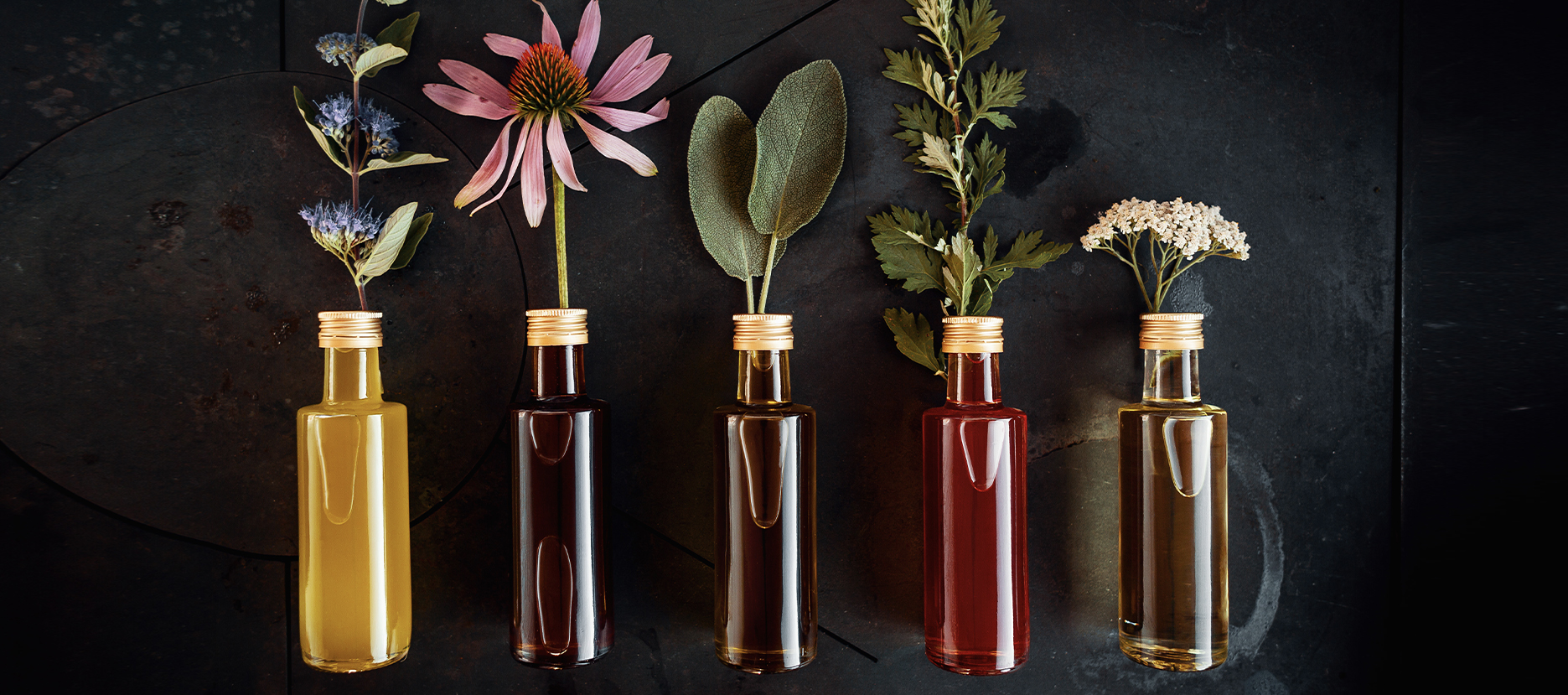
Creating a luxurious scent begins with a masterfully balanced formula. Exceptional natural botanicals and sophisticated aroma molecules must work together to produce multi-dimensional sensory effects that neither could achieve alone.
True luxury requires answers to key structural questions:
- Harmonious Transitions: Does the vibrant opening connect fluidly with the heart and dry-down?
- Ingredient Space: Does one heavy note crush delicate accent elements, or can each note breathe?
- Lasting Impression: Does the scent maintain its distinctive character hours after application?
Simply listing rare botanicals does not guarantee a magnificent scent; ingredients are merely the perfumer's vocabulary. Exploring Three Rare Ingredients That Create a Truly Luxurious Perfume illustrates how individual notes must be woven into an authentic emotional story to define a genuine luxury perfume in India.
How Does BEAUTIFUL INDIA® Redefine Luxury Beyond Oil Concentration?
BEAUTIFUL INDIA® redefines luxury by pairing globally harvested botanicals with pure Himalayan water, focusing on personal presence, emotional resonance, and inner discovery over pure oil percentage.
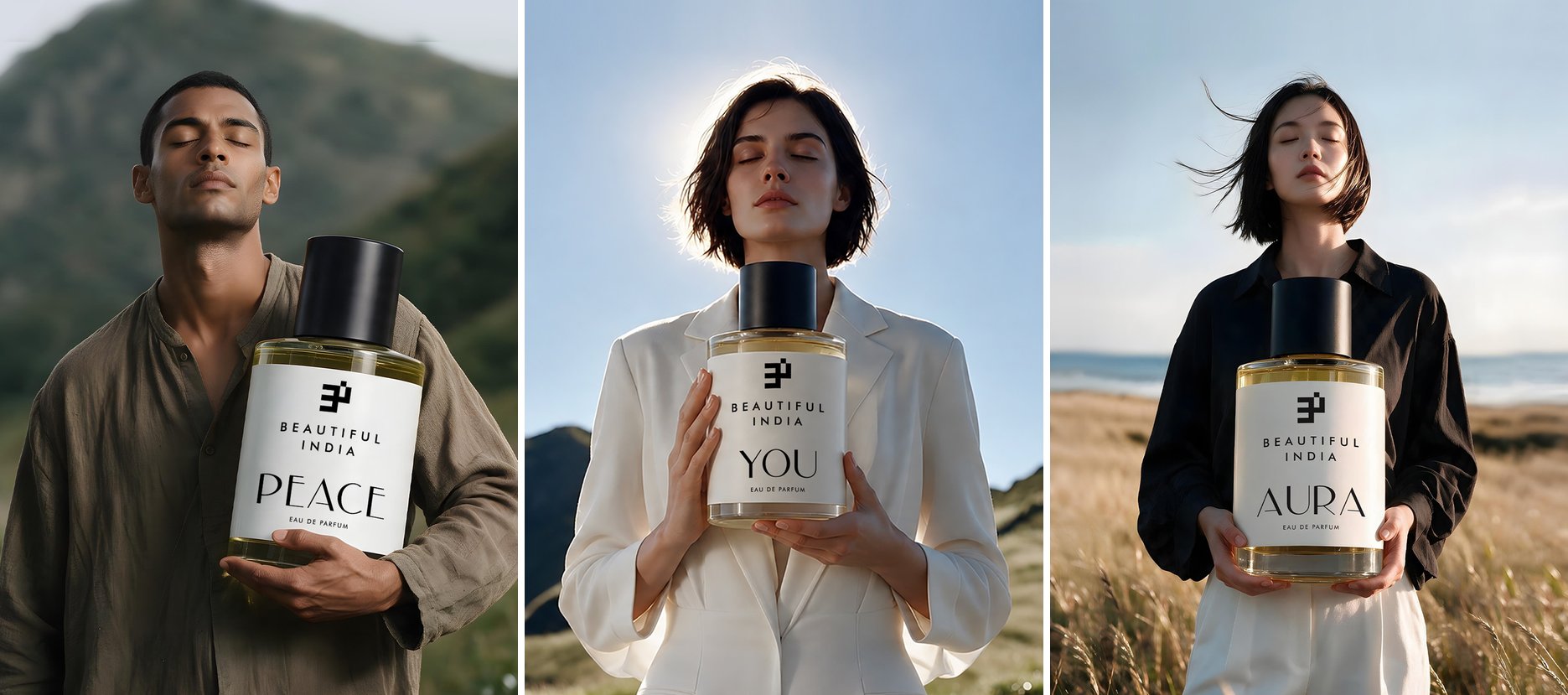
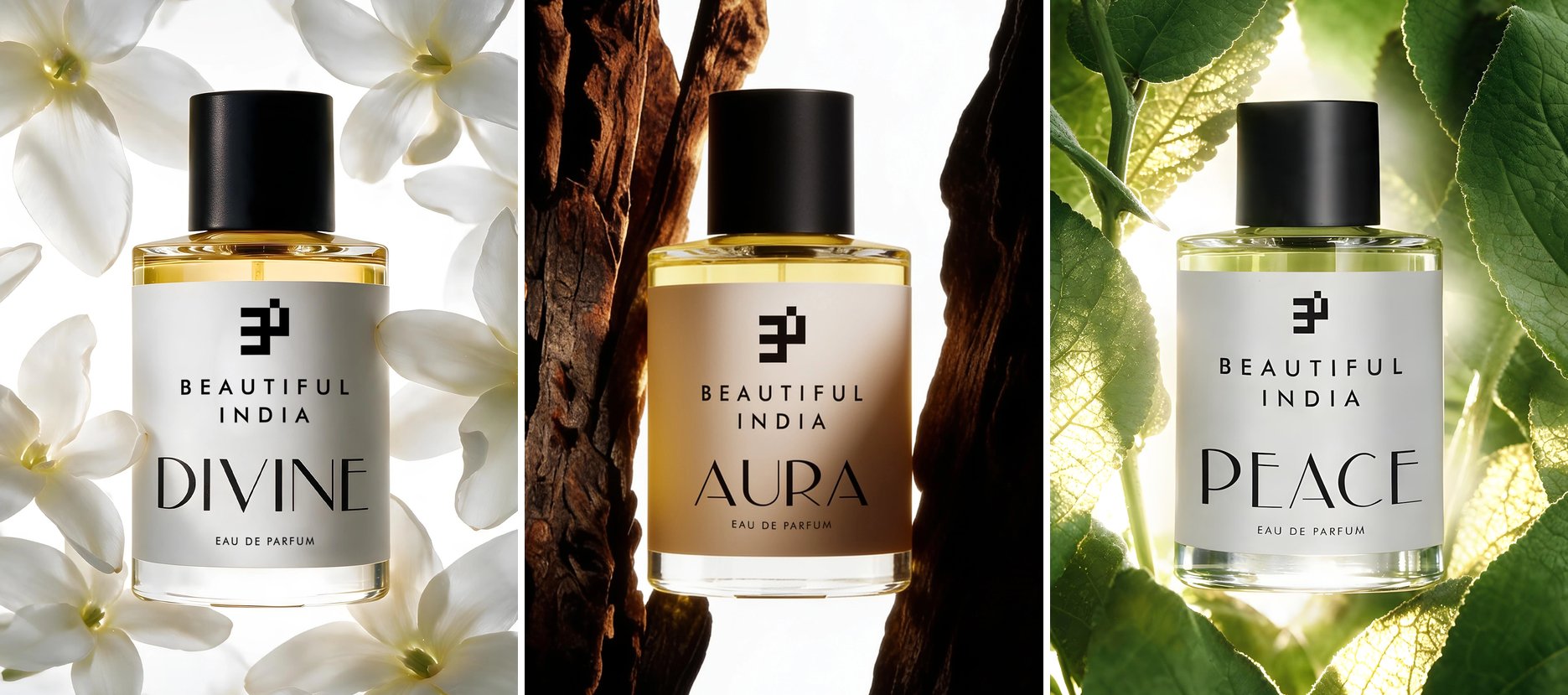
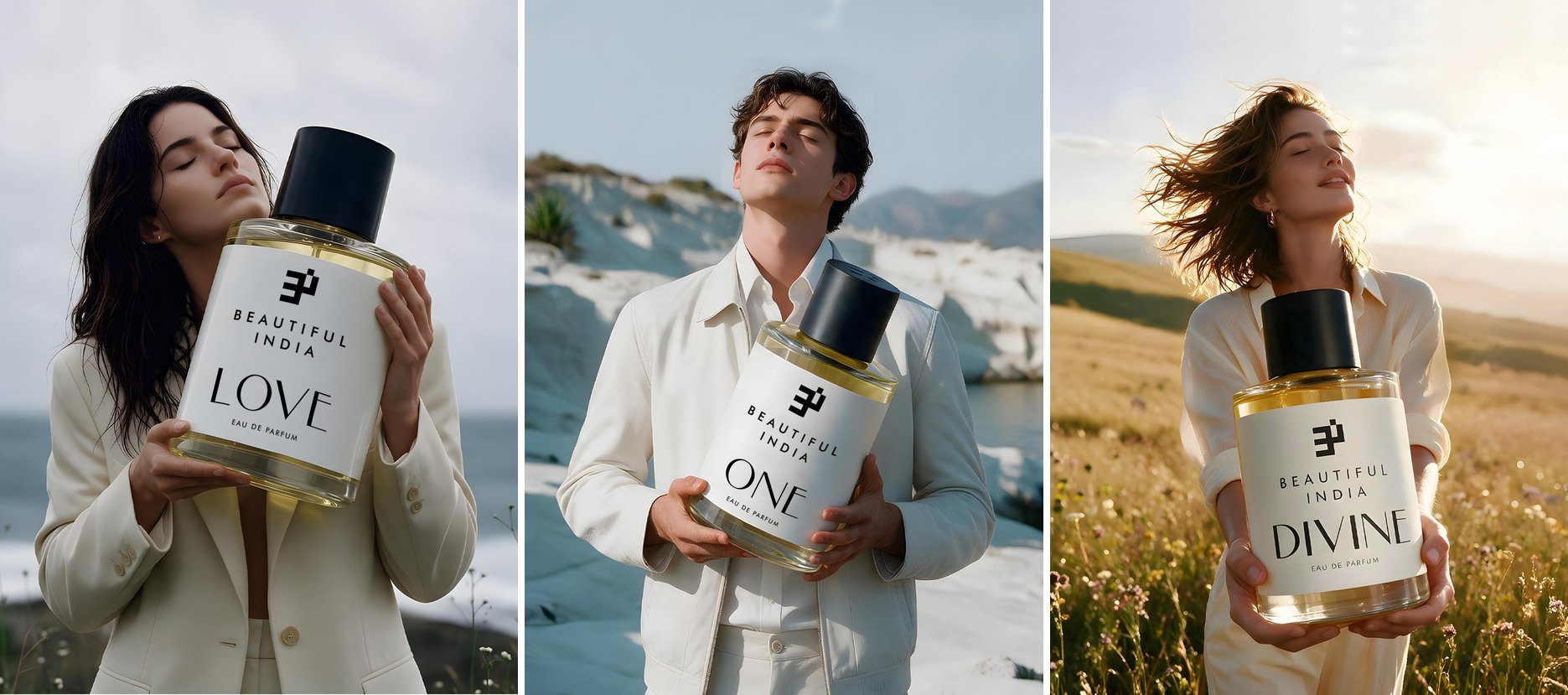
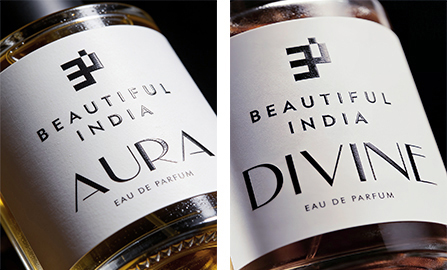
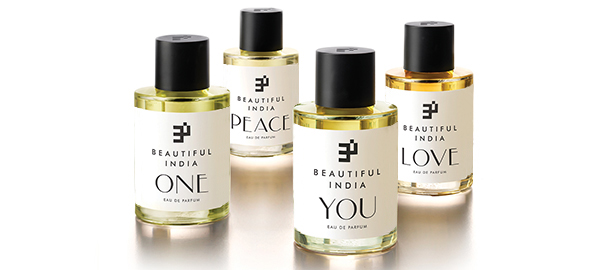
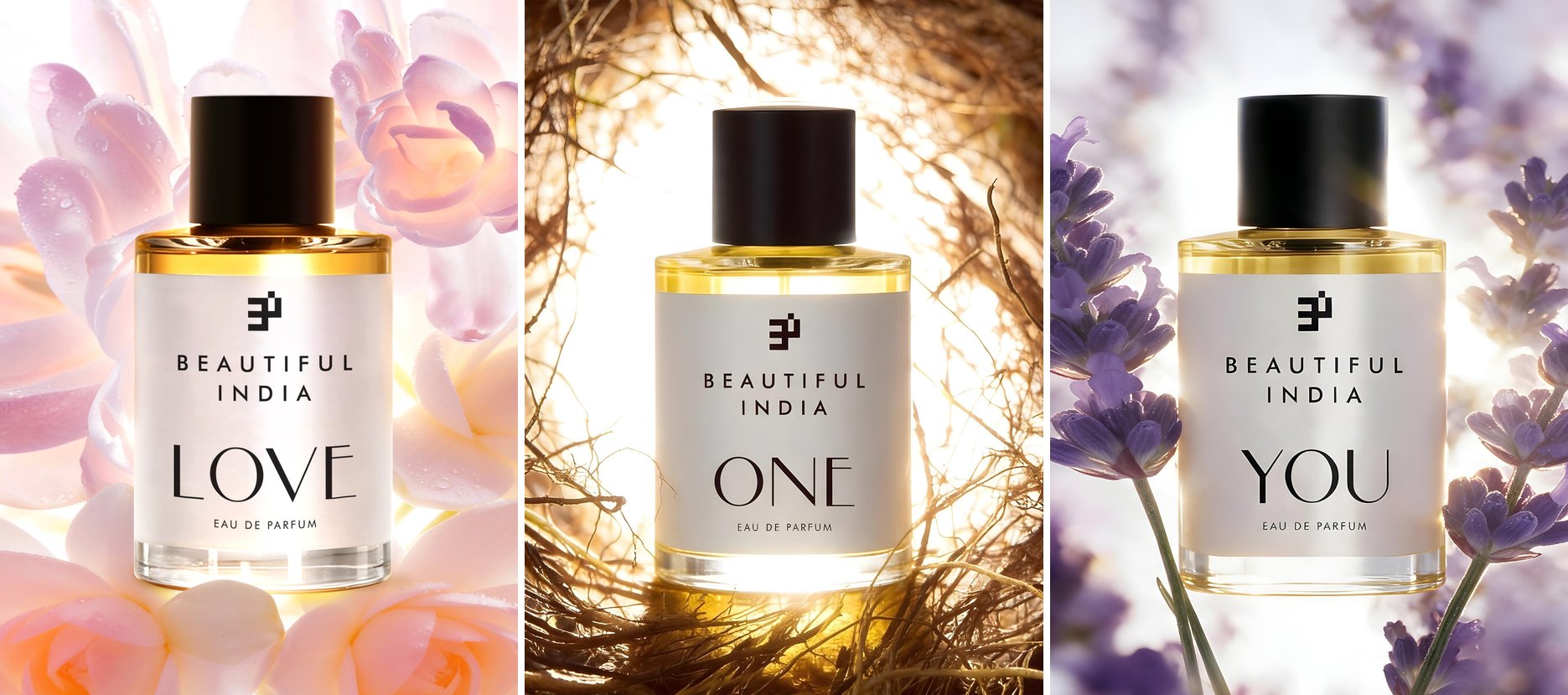
This philosophy sits at the heart of BEAUTIFUL INDIA®. Across emotive creations such as LOVE, PEACE, ONE, YOU, AURA, and DIVINE, world-class compositions converge into deeply personal sensory experiences:
- Global Botanical Sourcing: Indian Jasmine Sambac, Australian Sandalwood, Spanish Grapefruit, Bergamot, Saffron, Iris, Vetiver, Cardamom, Patchouli, rich woods, and warm musks.
- The Living Element: Pure, sacred Himalayan water running through every fragrance narrative.
- The Core Philosophy: Built upon the reflective question "Have you met the beautiful in you?", the brand crafts scents designed to accompany you rather than overwhelm your personal space.
Here, luxury is measured not in projection percentages, but in the intimate connection established when fine fragrance meets warm skin.
Should You Choose an EDP or EDT for Your Fragrance Collection?
You should choose an EDP if you desire an enveloping, long-lasting scent trail for intimate or evening settings, and an EDT if you prefer bright, refreshing, and transparent elegance for daily wear.
Rather than asking which concentration is objectively superior, consider how you want your fragrance to feel throughout the day:
- Evaluate Your Intention: Choose an EDP for rich, deep warmth, or an EDT for effortless, uplifting radiance.
- Test Directly on Skin: Allow the formula to interact with your personal skin chemistry across several hours.
- Observe the Dry-Down: Note how the opening notes yield to the heart, and how the base notes linger.
Understanding The Ritual of Wearing Fine Fragrance: Pulse Points, Fabric and Restraint ensures that whether you select an EDP or EDT, your luxury perfume in India performs with maximum elegance and subtle distinction.
Frequently Asked Questions (FAQs)
Q1: Is an Eau de Parfum (EDP) always longer-lasting than an Eau de Toilette (EDT)?
Generally yes, because an EDP contains a higher percentage of heavy base notes that evaporate slowly, though individual skin chemistry also plays a major role.
While EDPs typically offer extended longevity due to dense fixatives like amber, vetiver, and musks, a well-crafted EDT with high-grade botanical extracts can still linger beautifully on well-hydrated skin for hours.
Q2: Which concentration is better suited for warm and humid Indian weather?
An Eau de Toilette (EDT) or a fresh, well-balanced EDP with bright citrus and clean woody facets performs best in warm climates.
Lighter EDT formulations diffuse effortlessly in tropical heat without becoming cloying, making them ideal daytime choices for a luxury perfume in India during humid summer months.
Q3: Does skin type affect how an EDP or EDT smells on different people?
Yes, natural skin moisture, lipid levels, and body heat alter how quickly fragrance molecules evaporate and unfold.
Oily skin tends to retain lighter EDT top notes for longer periods, whereas drier skin absorbs fragrance oils faster, often making a richer EDP formulation the better option for sustained longevity.
Q4: Can you layer an Eau de Toilette with an Eau de Parfum?
Yes, layering a light EDT over a rich EDP base can create a custom, multi-layered scent profile with both vibrant projection and deep longevity.
By applying a warm EDP base note (such as sandalwood or amber) first and topping it with a fresh EDT accord (such as citrus or light florals), you create a personalized signature fragrance.
Q5: Why do some EDTs cost as much as fine EDP formulations?
EDTs using rare, hand-harvested natural botanicals and master craftsmanship cost more to produce than high-concentration synthetic EDP blends.
Pricing in fine perfumery reflects raw material quality, provenance, and artistic formulation discipline rather than the simple ratio of oil to alcohol inside the bottle.