
 France (en)
 Italy
Italy
 Japan
Japan
 United States





Why the Himalayas Belong in a Bottle: The Story of Glacial Water
Every great luxury house has a story that cannot be copied.
For some, it begins with a flower that blooms for only a few weeks each year. For others, it is a rare wood, a precious resin or a centuries-old workshop where every object is still finished by hand.
The world's finest luxury brands are remembered not only for what they create, but for where those creations begin.
Sometimes, the greatest ingredient is not the rarest. It is the one that gives everything else life.
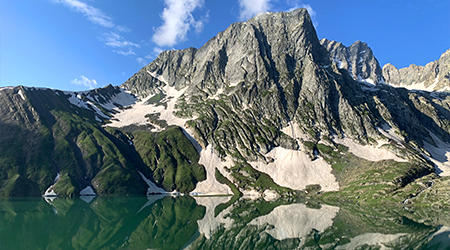
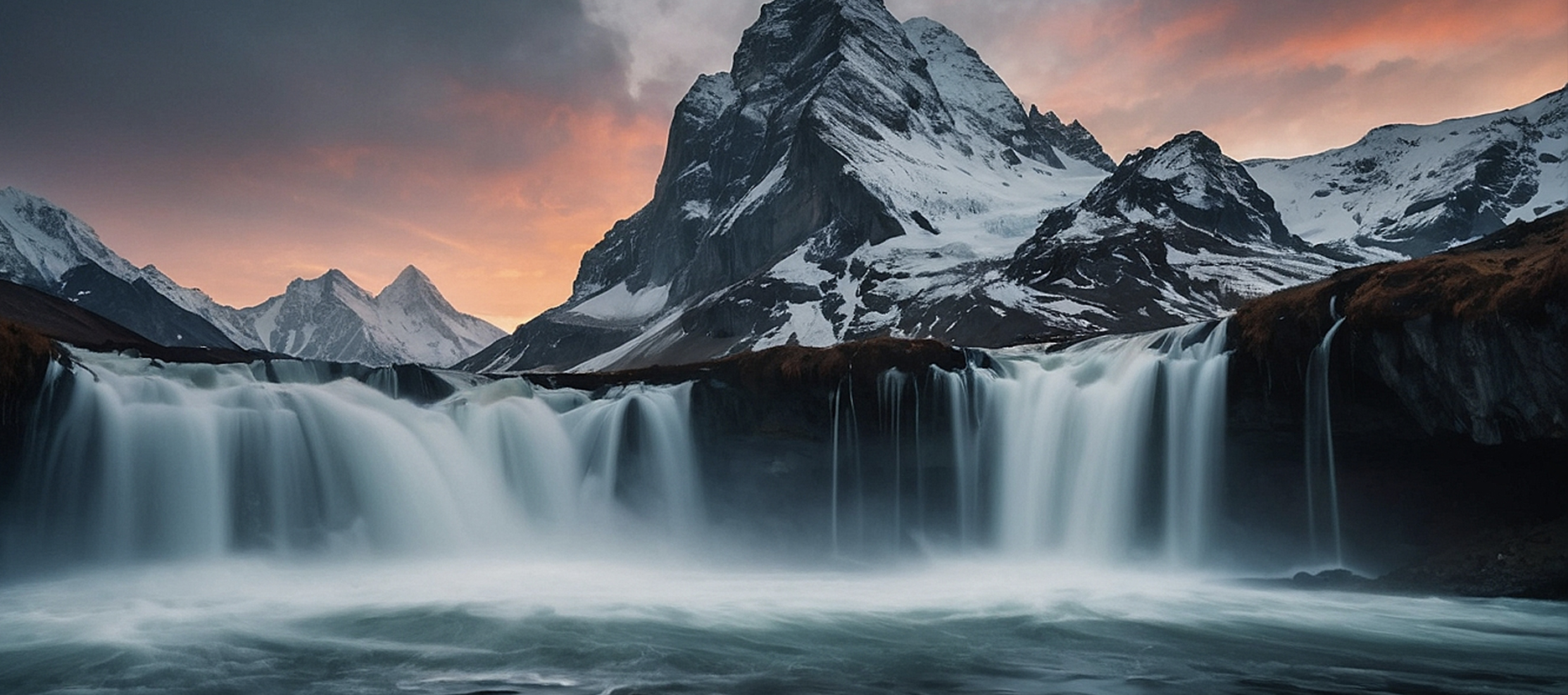
For BEAUTIFUL INDIA, that story begins high above the clouds, where the world's youngest mountain range touches the sky, and snow becomes water. It begins in the Himalayas.
More Than Mountains
The Himalayas are often described in terms of scale — home to the world's highest peaks, stretching across five nations, visible from space. Yet numbers alone fail to explain their significance.
For millions of people, the Himalayas represent something far deeper. They are symbols of purity, of stillness, of timelessness, of renewal.
For centuries, rivers born from Himalayan glaciers have nourished civilisations, forests and fertile plains. Long before science measured their mineral composition, people understood these waters as something extraordinary.
Water was never viewed simply as a resource. It was regarded as life itself. That reverence continues today.
The Long Journey of a Drop
Imagine a single snowflake settling onto a Himalayan glacier.
Winter after winter, snow accumulates, slowly compressing under its own weight until it becomes ancient ice. Years become decades. Decades become centuries.
Eventually, sunlight, gravity and changing seasons begin an almost imperceptible transformation. The ice melts. A single drop of glacial water begins its journey.
It travels through layers of ancient rock, naturally filtered by the very geology that created the Himalayas. Along the way, it gathers clarity rather than contamination, movement rather than haste.
Unlike treated water produced in hours, glacial water is shaped over generations. Nature becomes the patient artisan. Time becomes the unseen ingredient.
Why Water Matters More Than We Imagine
Water rarely receives attention in conversations about perfume. Instead, discussions focus on flowers, woods, spices and resins.
Yet water plays an essential role in fine fragrance. It is the medium through which ingredients come together. It supports balance, refinement and consistency during creation. While alcohol often carries the fragrance, water contributes to its integrity during formulation and production.
For houses that pursue exceptional quality, every ingredient matters — including those that remain invisible. Luxury has always been defined by attention to details that most people never notice.
Purity as a Philosophy
The finest luxury objects often express a single guiding principle. Swiss watchmaking values precision. Japanese craftsmanship celebrates restraint. Italian tailoring honours proportion.
The Himalayas embody purity. Not purity as perfection, but purity as authenticity — the absence of unnecessary complication, the clarity that comes from nature left largely untouched.
That philosophy feels increasingly relevant in a world often overwhelmed by speed and excess. Luxury is quietly returning to simplicity. Not simplicity born from scarcity, but simplicity achieved through refinement.
A Landscape That Inspires Creation
Perfumers frequently speak of emotional landscapes — not places that are copied literally, but places that influence the feeling of a composition.
The Himalayas inspire exactly this kind of creativity:
- The crisp morning air
- The silence after snowfall
- The scent of cedar carried on cool winds
- The freshness of mountain streams
- The warmth of sunlight reflected from stone
These experiences cannot simply be bottled. Yet they can influence how fragrance is imagined. Great perfumery has always translated places into emotions rather than photographs.
Nature's Slow Luxury
Modern life celebrates speed. Luxury often celebrates the opposite.
The finest leather develops character over years. The greatest wines mature patiently. Certain woods deepen with age. Patchouli becomes smoother over time. Even fragrance itself unfolds gradually.
The Himalayas remind us that nature works on a different timeline. Glaciers move almost invisibly. Mountains are sculpted over millennia. Water patiently shapes stone.
There is an important lesson here. Perhaps true luxury is not created by acceleration. Perhaps it is created by allowing time to do its quiet work.
Sustainability Begins at the Source
Luxury increasingly carries responsibility. Consumers today seek beauty that respects the natural world from which it comes.
Water, more than almost any other resource, reminds us of that responsibility. Its protection is not simply environmental. It is cultural. It is human. It is future-focused.
The world's most respected luxury houses increasingly recognise that provenance and stewardship belong together. To value nature is also to protect it.
The story of Himalayan water therefore becomes more than one of purity. It becomes one of respect.
Why Place Matters
Every remarkable fragrance carries a sense of place — not always in a literal sense, but sometimes emotionally, philosophically or culturally.
A perfume inspired by Mediterranean citrus evokes sunlight. Japanese hinoki recalls quiet forests. Moroccan orange blossom suggests warm evenings.
Likewise, the Himalayas evoke calm, stillness, perspective. Their presence extends beyond geography. They represent a state of mind.
This emotional resonance is precisely what distinguishes luxury fragrance from ordinary scent.
A Signature That Cannot Be Recreated
Many perfume houses share similar ingredients — rose, jasmine, patchouli, vetiver, cedarwood, vanilla. These materials are treasured across the industry.
What distinguishes one house from another is often not a single ingredient, but the philosophy that guides their combination. Some signatures emerge through craftsmanship. Others through artistic vision. Occasionally, they emerge through origin itself.
Pristine glacial Himalayan water represents one such signature — not because it is added for spectacle, but because it reflects a deeper commitment to provenance, authenticity and the quiet pursuit of excellence.
BEAUTIFUL INDIA: A Story Rooted in the Himalayas
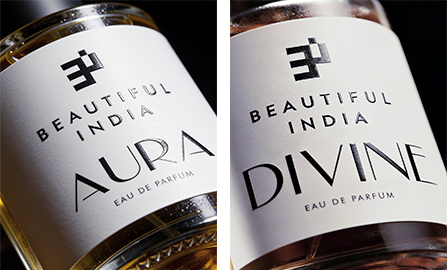
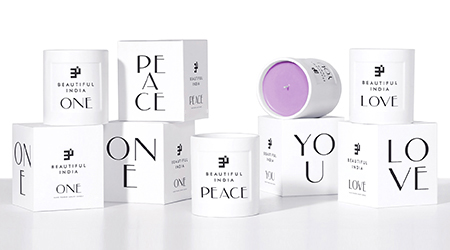
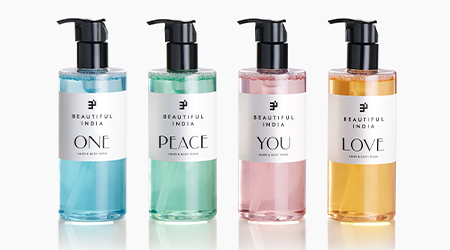
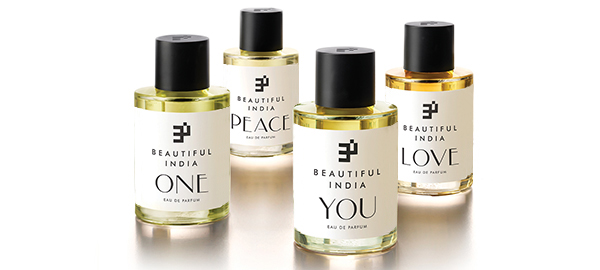
For BEAUTIFUL INDIA, glacial Himalayan water is far more than a formulation ingredient. It is the symbolic heart of the brand.
Each fragrance brings together exceptional Indian botanicals with 28 rare ingredients sourced from 22 countries, celebrating both India's richness and the interconnected world of fine perfumery. The compositions are then completed using pristine glacial Himalayan water.
This final touch is not intended as a claim of extravagance. Rather, it reflects a philosophy: that luxury begins with respect for nature, that extraordinary craftsmanship honours extraordinary origins, and that every fragrance should carry with it a sense of place as much as a beautiful scent.
Just as importantly, it reflects the brand's belief that the most meaningful journeys are inward. The Himalayas have long inspired seekers searching for clarity, silence and presence. In much the same way, BEAUTIFUL INDIA invites us to journey from the noise of everyday life towards something quieter — towards ourselves, towards the beautiful within.
The Future of Luxury May Be More Natural Than Ever
The next generation of luxury is unlikely to be defined by excess. Instead, it will be remembered for authenticity, for transparency, for meaningful stories rooted in real places.
Consumers increasingly seek products with provenance rather than spectacle. They value ingredients with history rather than novelty. They admire craftsmanship that feels timeless rather than fashionable.
The Himalayas embody all of these ideals. Their waters have travelled slowly through one of Earth's most extraordinary landscapes. Their symbolism transcends geography. Their purity inspires not only perfumers, but artists, writers and travellers from around the world.
Perhaps that is why they belong in fine fragrance. Not simply because they are rare, but because they remind us of something increasingly precious: that beauty often begins where nature is allowed to remain itself.
And that the finest luxury is not always the loudest expression of craftsmanship. Sometimes, it is the quietest.
Frequently Asked Questions
What is glacial Himalayan water and how is it formed?
It begins as snow settling on Himalayan glaciers, compressing into ancient ice over decades and centuries. As it melts, the water travels through layers of ancient rock, naturally filtered by the region's geology before it's collected a process shaped over generations rather than hours.
Why would a perfume brand use glacial water instead of ordinary water?
Water is the medium that helps bring fragrance ingredients together, supporting balance and consistency during formulation. Beyond function, glacial Himalayan water carries symbolic weight purity, provenance and a sense of place that ordinary treated water doesn't offer.
Does water actually affect how a perfume smells?
While alcohol typically carries the fragrance itself, water contributes to the formula's integrity and consistency during production. For houses focused on exceptional quality, even invisible details like water source are treated as meaningful.
What do the Himalayas represent symbolically in luxury fragrance?
The Himalayas are associated with purity, stillness, timelessness and renewal. In fragrance, this translates into an emotional landscape evoking calm and perspective rather than being used as a literal scent note.
Is using Himalayan water simply a marketing angle?
The brand frames it as a philosophy rather than a claim of extravagance — reflecting respect for nature, a belief that extraordinary craftsmanship honours extraordinary origins, and an invitation to journey inward toward "the beautiful within."
Why is sustainability connected to a story about water?
Water is one of the clearest reminders that provenance and stewardship go together. Protecting the sources of natural ingredients is treated as part of luxury's responsibility not simply an environmental issue, but a cultural and human one.
How does this connect to the broader idea of "slow luxury"?
Like fine leather, aged wine or matured woods, glacial water forms over a timeline nature controls rather than one that can be accelerated. It's used as an example of how true luxury often comes from patience rather than speed.